Mapping
Mapping
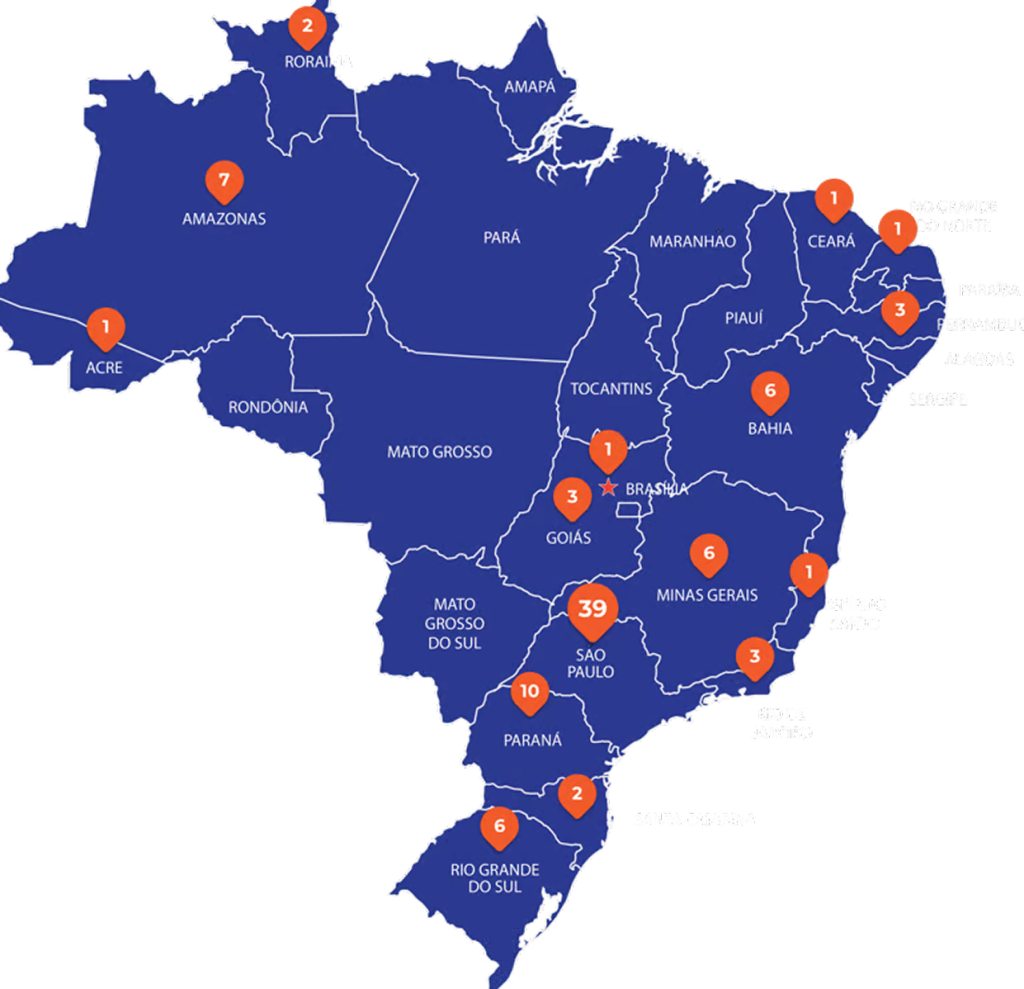
PHASE 2: 2024 - Mapping of Evangelical Christian Organizations and Churches that develop actions to support refugees and migrants in Brazil.
The number of forced migrants reached 120 million in 2024, including internally displaced persons and refugees, reflecting the impact of conflicts, climate change, and economic crises, according to the UN Refugee Agency (UNHCR).
According to data released in the latest edition of the “Refuge in Numbers” report, in Brazil alone, 58,628 asylum applications were made in 2023, originating from 150 countries.
We present PHASE 2 of the Mapping, which consisted of actions aimed at updating the data in the context of 2024, taking into account that migratory flows are always in motion and that host institutions are also adjusting to this flow, ending or adapting their operations. The intention is to make this tool increasingly realistic, practical, and useful through constant updating and improvement, providing better capacity for identification, dialogue, interaction, and integration between institutions, aiming for the effectiveness of the intended results.
Phase 2 of the Mapping project was carried out in partnership between the CASA Association, the Born Among Us Movement, the International Bible Society, and Tearfund, with support from the UN Refugee Agency (UNHCR).
A summary of the mapped information is presented below.
Statistics and Analysis
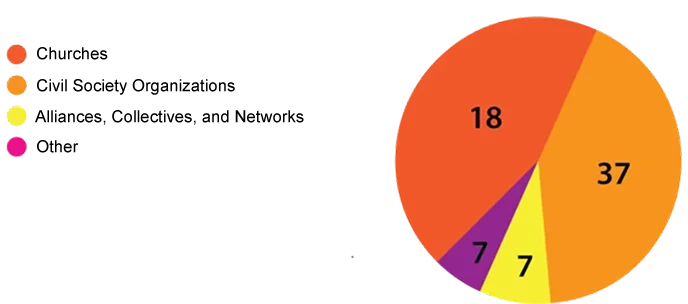
The previous mapping involved 105 organizations and churches working on migration and refugee issues.
21 NEW INSTITUTIONS WERE ADDED TO THE MAPPING IN THIS EDITION
- 8 Churches (38.1%)
- 8 organizations (38.1%)
- 2 Alliances/Networks/Collectives (9.5%)
- 3 others (14.3%)
Between September and December 2024:
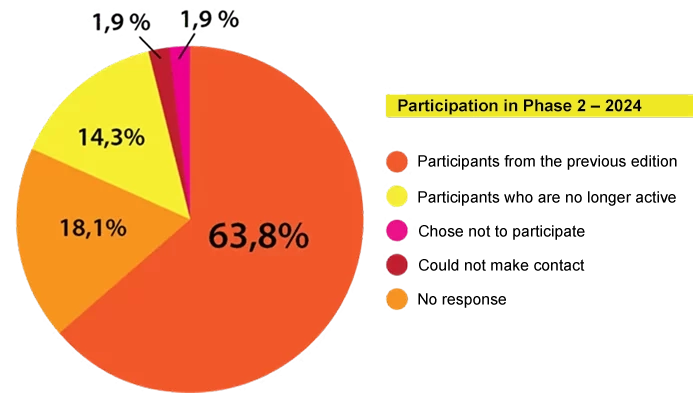
88 organizations responded to the mapping
Compared to the previous year, we have a change in the chart, of those that stopped working on the topic, the majority are churches (11), followed by 3 Organizations and 1 Collective.
Working in partnership
The mapping aims, among other objectives, to enable the establishment and strengthening of a network among churches and organizations working on this issue, enhancing joint efforts.
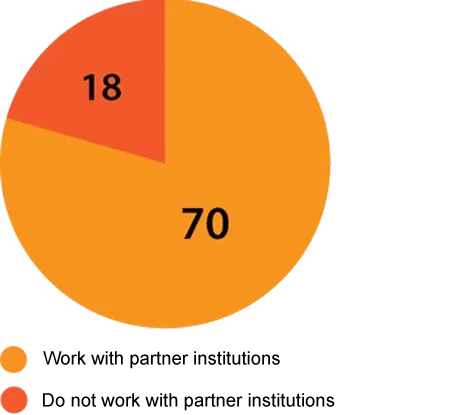
Networking remains a strength, as most responding evangelical Christian churches and organizations reported working with other partner institutions to offer services and assistance to refugee or migrant populations. However, 18 institutions do not work in partnership with other institutions.
"Our work was only possible thanks to the partnership with CASA Association and Panahgah Humanitarian Support Association."
reported Keyla Camargo, Vice-President of the Robinson Cavalcanti Institute, in Recife/PE
Employees and Volunteers
Number of volunteers working with the refugee and migrant population
Six institutions have no volunteers working directly with the refugee or migrant population. The majority, however (29 institutions, or 33%), have 1 to 5 volunteers, and 21 organizations (24%) have 6 to 10 volunteers. The remaining 30 institutions have more than 10 volunteers working with this population, with 3 having more than 50 volunteers.
These data reinforce the strength of volunteering in serving the migrant and refugee population.
Number of staff working with the refugee and migrant population
More than half of the institutions (60%) do not have contracted staff working directly with the refugee or migrant population; a significant portion (24 institutions, 27%) have between one and ten employees; and another 9 institutions have more than ten employees working with this population.
Services
116,000 direct services
provided to the refugee or migrant population in 2023
The significant number of services provided to the refugee and migrant population continues to encompass a wide variety of actions, ranging from organizations and churches that provided shelter to a refugee family throughout the year, to large projects that accounted for thousands of services provided annually.
Nationalities Served
Individuals from at least 40 nationalities have already been assisted by the organizations and churches that participated in the mapping project.
The following nationalities stand out:
Services and assistance offered
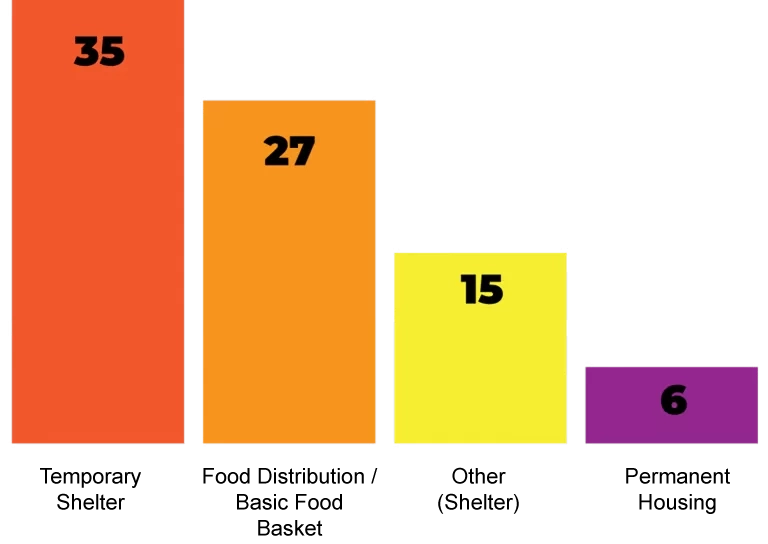
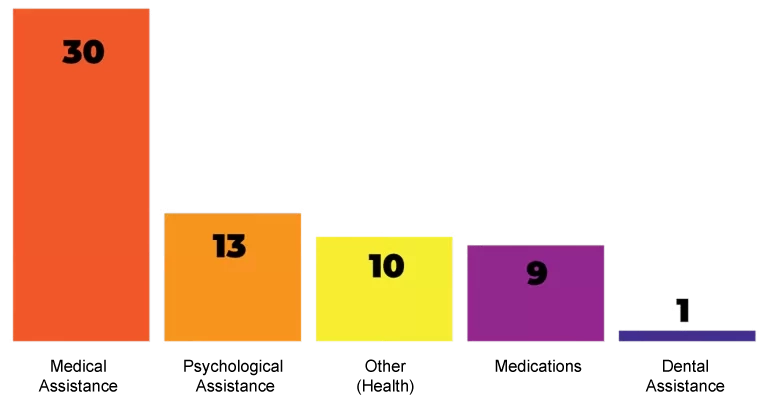
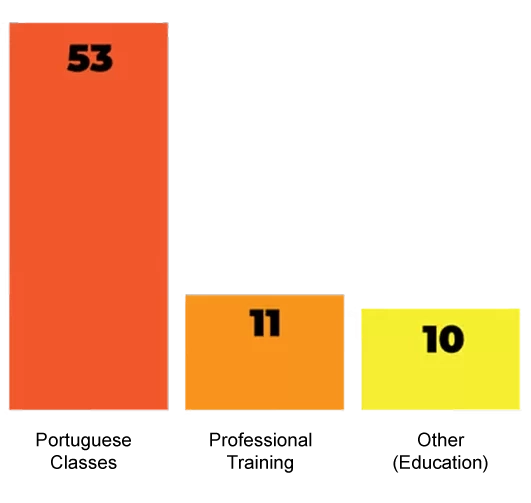
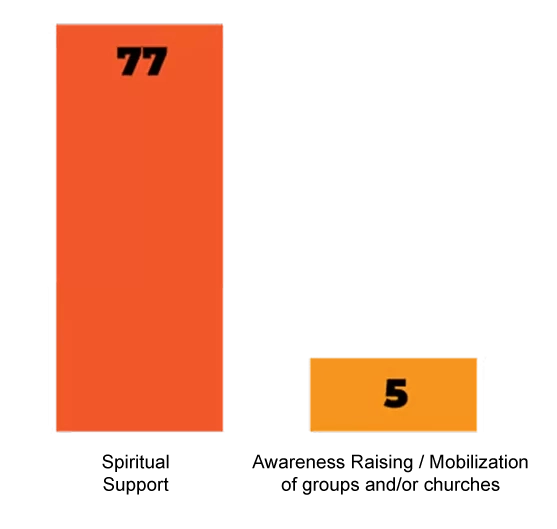
Among the services and assistance provided by evangelical Christian organizations and churches, spiritual support, assistance with documentation, and Portuguese language classes stand out, being mentioned by more than half of the organizations surveyed.
Shelter and Food Distribution
Health
Education
Integration, internalization and humanitarian transport
Protection, Promotion and Guarantee of Rights
Other Services
Areas of operation